Organize local folders as a Notion database
By Files to Notion. Updated .
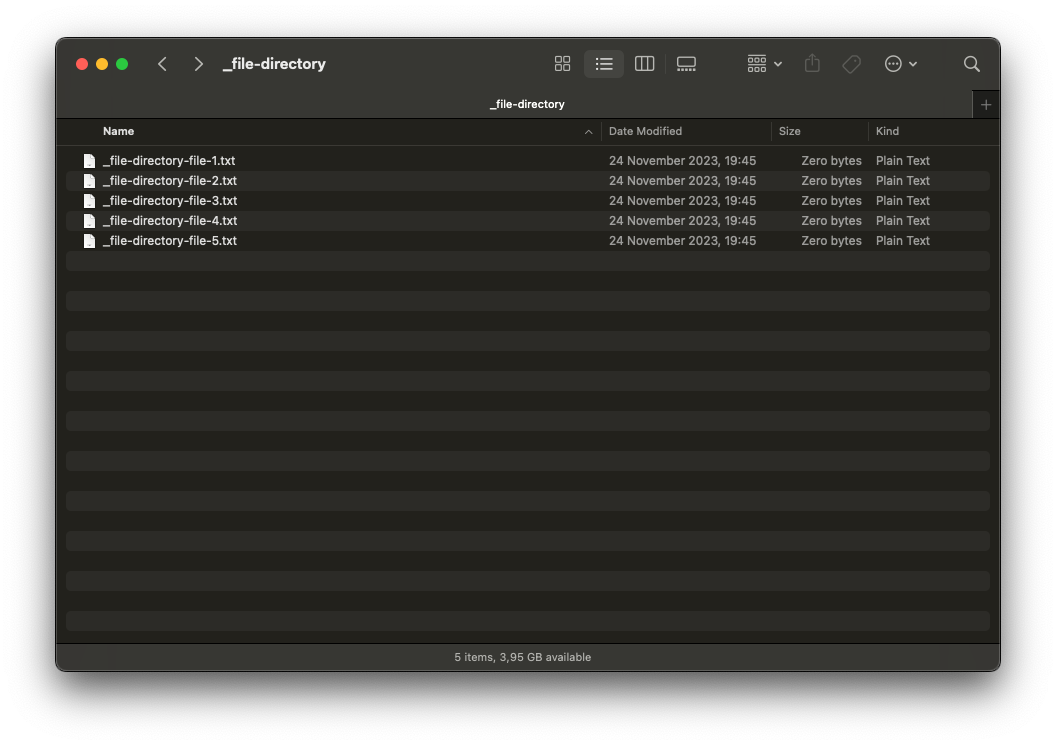
You can represent the files in a local folder as Notion database entries without uploading their contents. Files to Notion reads metadata from your selected directory and creates links that open those files through the desktop app.
Local folders are not the same as Notion subpages
A Notion subpage organizes pages inside Notion. A folder in Finder or File Explorer contains files on your computer. A database can catalog those files, but creating an entry does not move the file into Notion or turn the database into a backup.
What you need
- A Mac or Windows PC with the files available locally.
- Files to Notion installed and connected to a page through your own integration.
- Basic for one directory and 100 files, or Extended for subdirectories and larger catalogs.
Walkthrough: catalog a project folder
- Download Files to Notion and follow the Notion integration setup.
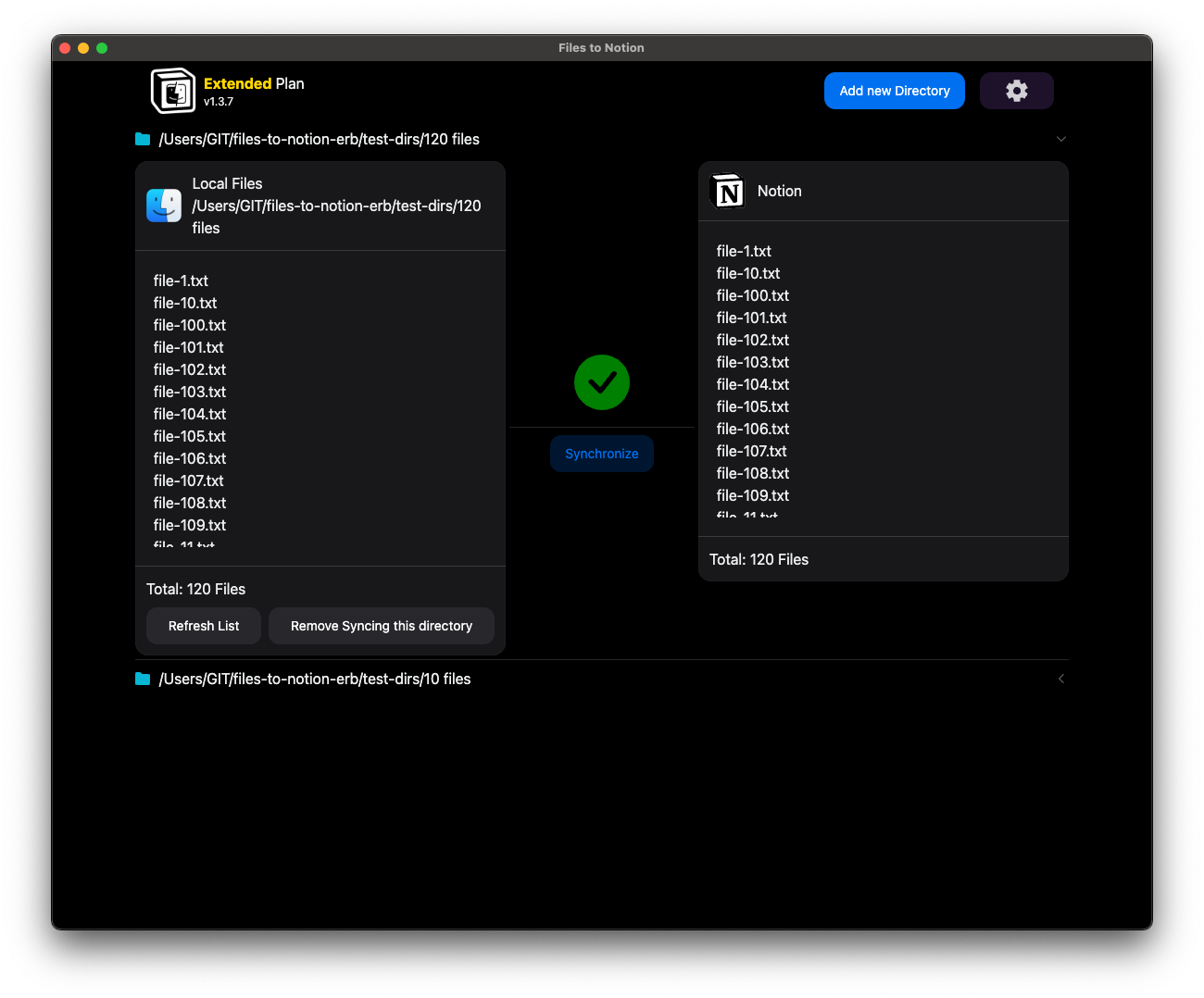
- Choose the local directory you want to catalog, such as a folder containing PDFs or video project assets.
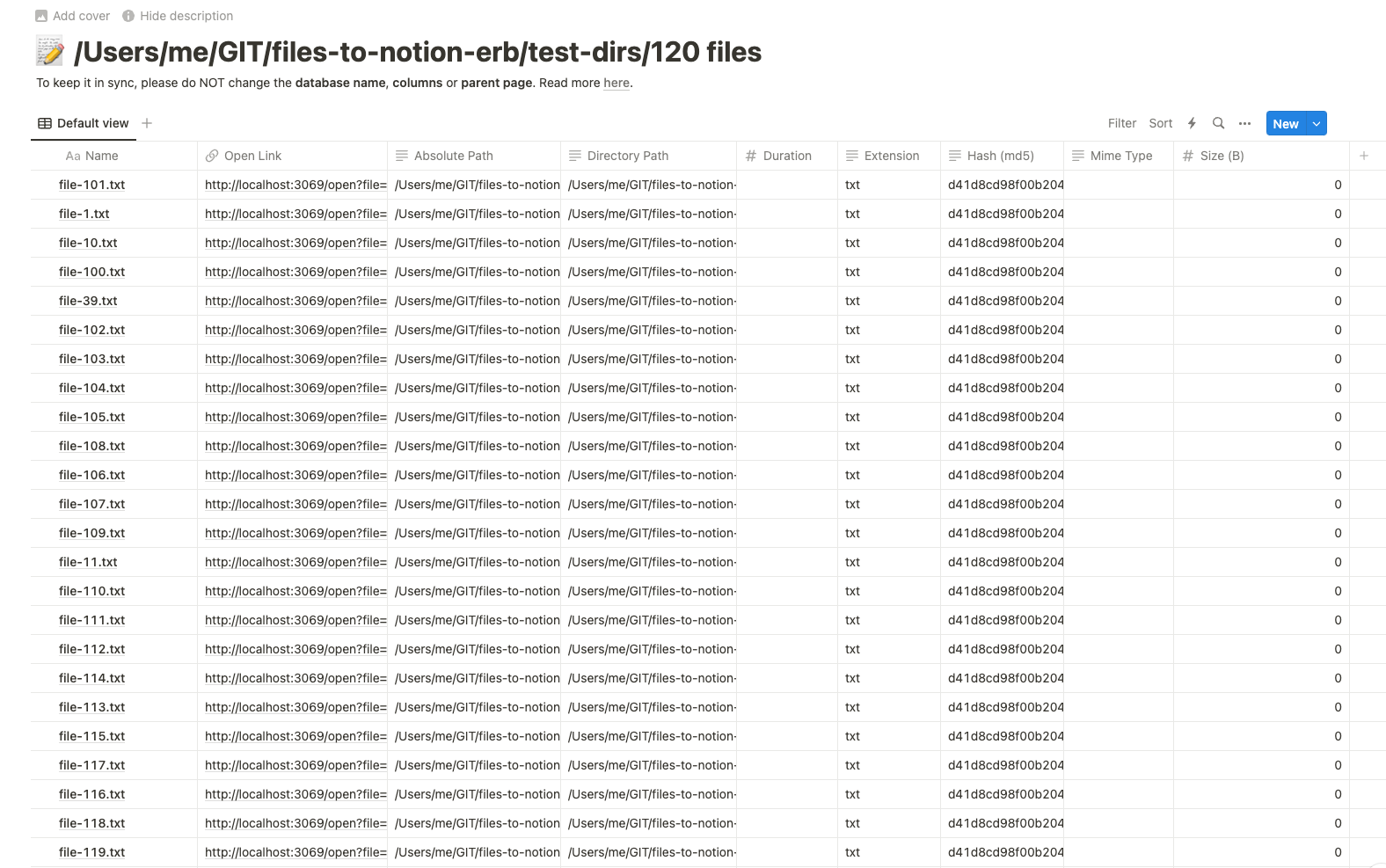
- Synchronize the directory. Review the generated file names, types, sizes, and paths in Notion.
- Use Notion views and filters to organize entries, then click a generated file link while the app is running.
What about nested folders?
Basic synchronizes the immediate files in one directory. The Extended Plan also synchronizes files in subdirectories. For example, a project with an Audio folder and a Video folder can be cataloged from its parent directory. The Notion entries describe the files; the original folder structure stays on disk.
Parent-directory metadata helps distinguish files from different folders. Use file filtering when you need to exclude selected extensions, subdirectories, or name patterns.
Limitations and common questions
- If a file moves, the old path can stop working. Synchronize again and check the new entry.
- Keep the app running when opening local links. See the opening-files troubleshooting guide.
- Local links do not share file contents with teammates. For downloaded cloud folders, use the Shared Team Directories setup.
- Names and absolute paths are sent to Notion. Treat them as potentially sensitive metadata.
When should you upload files instead?
If people need attachments available through Notion without the local app, a native upload or cloud link may fit better. Upload limits depend on Notion's plan and file type; check Notion's current file documentation. Compare all three approaches in the file-management guide.
Start with the Basic Plan walkthrough and a small folder. Extended is $39 once, with a two-device license and a 30-day money-back guarantee.